
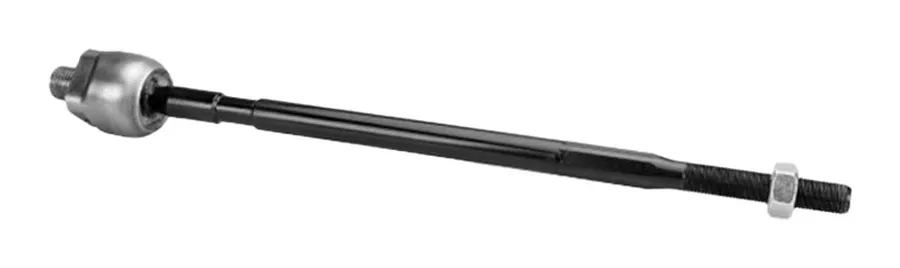
An inner tie rod screws into each end of the steering rack. Its inner end is a spherical joint inside a sealed housing, which lets the rod swing up and down with the suspension while the rack moves it sideways; its outer end is a threaded shank onto which the tie rod end is screwed and locked with a nut. Together, the inner tie rod and the tie rod end connect the rack to the steering knuckle.
The inner joint lives inside the rubber gaiter of the steering gear. A split gaiter lets grit and water reach it, and the joint then wears until the rod moves without moving the rack: the driver feels a loose, wandering steering and hears a knock over bumps.
FUHRLENK inner tie rods are made to the joint dimensions, the rod length and both threads of the original part. They are made to OEM-compliant quality and tested for durability and temperature resistance.
The range covers European and Japanese passenger cars. Each reference is identified by the OE number of the original part; send that number and the vehicle identification number (VIN) and we confirm the matching FUHRLENK reference.
For availability and OE cross-references, contact us by email.