
The short answer
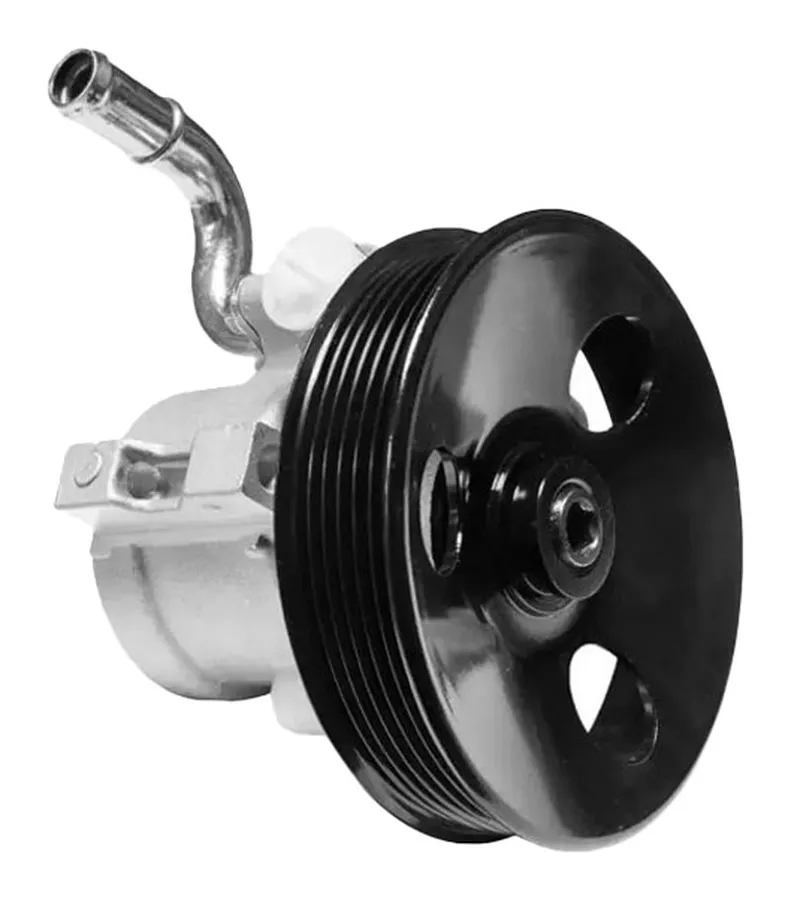
A hydraulic power steering pump, driven by the engine belt, pushes fluid under pressure to the steering gear so the driver turns the wheels with little effort. A whine from the pump that changes with engine speed is most often caused by a low fluid level or by air in the fluid, so the reservoir is checked before the pump is blamed. Heavy steering, a leak at the pump or the lines, or an empty reservoir are the findings that a roadworthiness test records as defects.
How the system works
“The hydraulic pressure typically comes from a gerotor or rotary vane pump driven by the vehicle’s engine.” That pressure reaches the steering gear, where “a double-acting hydraulic cylinder applies a force to the steering gear, which in turn steers the roadwheels”. A valve on the pinion meters the assistance: “The more torque the driver applies to the steering wheel and column, the more fluid the valves allow through to the cylinder.”
Because the pump turns with the engine, it delivers far more flow at speed than the steering needs. “A restricting orifice and flow-control valve direct some of the pump’s output back to the hydraulic reservoir at high engine speeds. A pressure relief valve prevents a dangerous build-up of pressure.”
The fluid is an oil: “Common working liquids are based on mineral oil and are similar to, and in some cases the same as, automatic transmission fluid.” The exact type is set by the vehicle manufacturer.
What happens when it fails
The system is designed so that “should the booster fail, the steering will continue to work (although the wheel will feel heavier)”. The car remains steerable, but the effort at parking speeds rises sharply, which is the symptom most drivers notice first.
Checking the fluid
“Each vehicle owner’s manual gives instructions for inspection of fluid levels and regular maintenance of the power steering system.” The RAC’s advice for the check: “ensure the car is parked on a level surface and ensure that the engine is cool”, read the level against the marks on the reservoir, and “if it needs topping up, use the correct power steering fluid type specified in the owner’s manual”. The warning is worth repeating: “Using the wrong fluid or incorrectly refilling the power steering fluid tank can damage your vehicle.”
The look of the fluid matters as well as its level: “If the fluid is dirty or cloudy, it may indicate a problem with the power steering system.”
What a whine means
“The most common cause of power steering noises coming from the pump is a low fluid level.” Air is the other usual cause: “If the pump impeller starts to catch air bubbles, it can cause unwanted noise and vibrations.” Air gets in when the level drops below the pick-up in the reservoir, through a loose hose on the suction side, or when the system has not been bled after a repair.
Only after the level and the fluid are right does the pump itself come into question. “A failing pump is also another cause of power steering noises”, and “difficulty steering your car or leaking power steering fluid around the pulley” point at the pump rather than at the fluid. Some pumps “may get noisy with age, but continue to work well enough”.
| Finding | First suspect |
|---|---|
| Whine that rises and falls with engine speed, fluid low | Fluid level, then the reason it is low: a leak |
| Whine, fluid at the mark but foamy or bubbly | Air drawn in on the suction side; bleed the system and check the hoses |
| Whine, fluid correct and clean, steering heavy | The pump: worn vanes, bearings or seals |
| Fluid around the pulley | The shaft seal of the pump |
| Steering heavy only when cold | Old or wrong fluid, or a pump losing pressure; check the fluid type first |
What a tester looks for
The MOT inspection manual checks the hydraulic system without opening it: the fluid level is read through the sight glass or against the reservoir marks, and “the cap should not be removed”. The findings are graded as follows.
| Finding | Judged as |
|---|---|
| “Power steering fluid level below minimum mark” | Minor |
| Power steering fluid “reservoir empty” | Major |
| “Power steering fluid leaking or system malfunctioning” | Major |
A system that leaks or does not assist is therefore a defect to be repaired, not a fault to live with, even though the car can still be steered.
Replacing the pump
When the pump is the fault, the belt, the reservoir and the hoses are inspected with it: a pump fitted to a system full of the old contaminated fluid, or to a cracked suction hose that keeps drawing air, will whine again. The system is filled with the fluid the manufacturer specifies and bled until the reservoir stops foaming.
FUHRLENK supplies hydraulic power steering pumps and steering gears for European and Japanese passenger cars, identified by OE reference.